
Vendor Vetting
Can an Independent Service Provider Service Imaging Equipment?
June 23, 2026 · 7 min · Medical Imaging Specialists
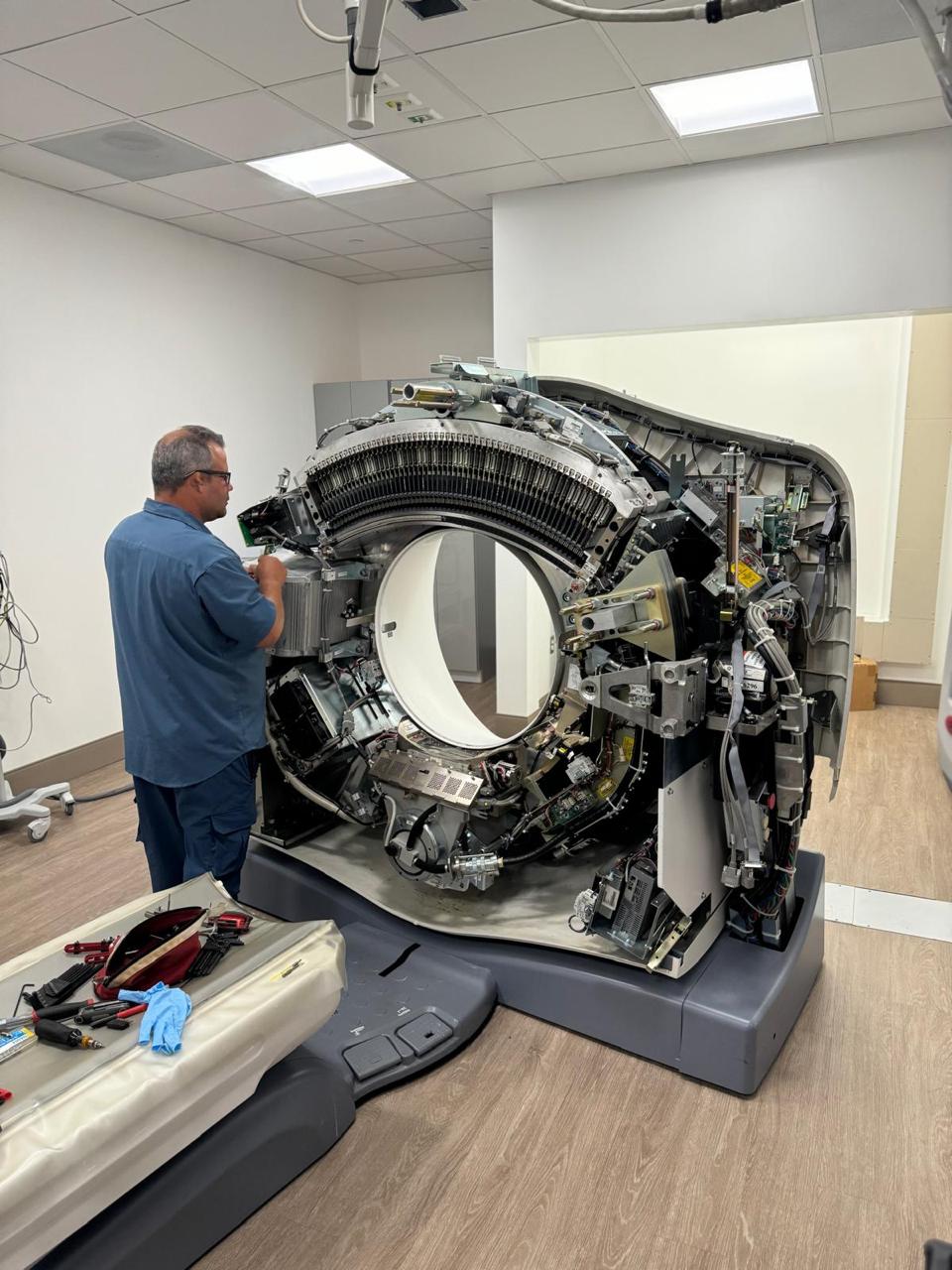
Practical considerations, risk points, and what to ask before you buy, service, move, or maintain imaging equipment.
Yes, an independent service provider can often service medical imaging equipment, including CT, MRI, PET/CT, X-ray, C-arm, ultrasound, DEXA, and cath lab systems. The real question is not whether the provider is independent or OEM. The question is whether the provider is qualified for the exact modality, manufacturer, model, software level, parts path, safety boundaries, and uptime risk at your facility.
Some equipment and situations still need OEM involvement. Many systems, especially mature platforms, can be supported well by an experienced independent service organization when the scope is clear and the provider has real field capability.
Independent service is a capability question
Facilities usually ask this question because they are trying to control cost without taking on extra downtime risk. That is a fair concern. Medical imaging service is not generic maintenance. A CT scanner, MRI system, PET/CT, or X-ray room has high-voltage components, motion systems, cooling, software, and safety requirements that have to be handled correctly.
An independent service provider should be evaluated by proof, not by label. Ask who performs the work, which modalities they support, what documentation they provide, how parts are sourced, and what happens when a problem escalates.
For refurbished equipment, this matters even more. The service plan should be part of the buying decision, not an afterthought. MIS supports buyers across equipment, service, parts, service agreements, and replacement planning because those decisions are connected in the real world.
When an independent provider can be a strong fit
Independent imaging equipment service can work well when the provider knows the platform, has compatible parts access, documents preventive maintenance, and communicates clearly. Mature CT, MRI, PET/CT, X-ray, C-arm, ultrasound, DEXA, and cath lab systems are often supported outside the OEM channel when the provider has the right experience.
Good independent service is not just a technician showing up after a failure. It includes PM planning, service-history review, parts-risk discussion, site-condition checks, and repair-versus-replacement guidance.
For example, an aging CT scanner with recurring cooling alarms may need more than a reset. The facility needs someone who can review error history, check room conditions, confirm part compatibility, and explain whether the scanner still makes sense to support.
If you are weighing service options for a refurbished scanner, also read Do Refurbished CT Scanners Need OEM Service Plans? and Medical Imaging Service Contracts: Full Service vs. T&M vs. PM-Only.
When OEM service may still be needed
There are situations where OEM service may be the cleaner or required path. Newer systems may depend on proprietary tools, software access, advanced applications, or warranty terms. Some hospital policies or purchasing rules may also specify OEM support for certain assets.
That does not mean OEM service automatically covers everything a facility expects. Any service plan, OEM or independent, should be reviewed line by line. Confirm PM frequency, labor, travel, parts, software support, response expectations, exclusions, escalation process, and end-of-support status.
The mistake is assuming one path is always safer. A weak independent plan is a risk. So is an expensive OEM plan with exclusions the facility did not understand. Buy the scope and capability, not the name on the proposal.
For broader planning, MIS has a practical guide on how often medical imaging equipment should be serviced.
What to verify before choosing a service provider
Before signing a service agreement or requesting a repair visit, get specific. A credible provider should be able to answer direct questions without hiding behind vague language.
Start with modality and model fit. Ask whether the provider services your exact system family, not just “CT” or “MRI” in general. Then ask whether the assigned engineers have field experience with that platform.
Next, verify parts strategy. Does the provider maintain inventory? Do they have access to tested used, refurbished, repaired, exchange, or new parts where appropriate? How do they confirm compatibility if the first part path is unavailable?
Then review documentation. Preventive maintenance should leave usable records, not just a checkbox. Corrective service should document findings, parts used, work performed, remaining risk, and recommendations.
Finally, ask about escalation. Some issues require additional tooling, factory input, specialist support, software access, or replacement planning. A good provider should say where their scope ends instead of pretending every problem is simple.
Modality-specific service considerations
CT service usually turns on tube history, detector behavior, gantry and table function, generator performance, cooling, workstation health, and recurring error patterns. A provider should understand that the tube is important, but not the whole machine.
MRI service has a different risk profile. Coils, table movement, RF and gradient behavior, image-quality complaints, chiller or HVAC performance, room conditions, and magnet-related support systems can all affect uptime. Facilities should involve qualified service and follow site safety procedures.
PET/CT combines two systems in one operating plan. The CT side, PET detector side, calibration history, workstation, room workflow, and service documentation all matter. A provider that can only speak to one side may not be enough.
X-ray, C-arm, ultrasound, DEXA, and cath lab equipment can look simpler until the room is down. Detectors, generators, probes, tables, workstations, cables, power, software, and DICOM routing can all become service issues. If a quote only says “repair X-ray,” ask what that actually includes.
When parts are part of the issue, start with Where Can I Buy Reliable Medical Imaging Equipment Parts? or submit a request through the MIS parts page.
Common mistakes when comparing OEM and independent service
The first mistake is comparing only the annual price. A lower quote may exclude parts, tubes, coils, detectors, travel, after-hours work, software, or repeat visits. A higher quote may still have exclusions that matter. Compare the operating risk, not just the contract total.
The second mistake is waiting until downtime to choose a provider. Emergency service is harder when no one has the model, serial number, service history, site conditions, or parts path ready. Build the plan while the system is still scanning.
The third mistake is ordering parts before confirming the failure. Imaging systems are configuration-sensitive. A board, detector, coil, tube, generator component, or workstation part can be wrong by revision, software level, connector, or option package. Diagnosis should drive parts, not guesswork.
The fourth mistake is treating preventive maintenance as a guarantee. PM reduces risk and gives the facility better information, but it cannot promise that every tube, board, chiller, detector, coil, or mechanical component will never fail.
The fifth mistake is leaving service out of the buying process. If you are buying CT, MRI, PET/CT, X-ray, or another modality, check serviceability before installation. Start with refurbished equipment quotes, mobile imaging leasing, or the relevant equipment category if replacement or backup capacity is part of the plan.
What to send before requesting independent service
Send a clean, PHI-free package. Include modality, manufacturer, model, serial number, software level if known, facility location, current status, error codes, symptoms, service history, recent parts replaced, PM schedule, room conditions, downtime urgency, and photos of equipment labels or error screens when appropriate.
Do not send patient names, dates of birth, accession numbers, schedules, reports, images, labels, or any other protected health information. If an error screen or workstation photo includes patient data, crop or redact it before sharing.
That information lets the provider determine whether the request belongs in preventive maintenance, corrective repair, parts sourcing, service-agreement planning, equipment replacement, or temporary capacity planning.
FAQ
Can independent service providers work on CT scanners?
Often, yes. The provider should have CT-specific experience, access to compatible parts, preventive maintenance procedures, and a clear plan for tube, detector, table, gantry, cooling, workstation, and error-log issues.
Can an independent provider service MRI equipment?
In many cases, yes, but MRI service requires strict attention to safety, room conditions, coils, support systems, image quality, and qualified service boundaries. Some issues may still require OEM or specialist involvement.
Is independent service always cheaper than OEM service?
Not always. Independent service may reduce cost in some cases, but the real comparison is scope, parts, response, documentation, exclusions, and downtime risk.
Will independent service void a warranty?
It depends on the equipment, warranty terms, contract language, work performed, and provider. Review the actual agreement before assuming independent service is allowed or prohibited.
What is the safest way to compare service quotes?
Ask each provider to define PM frequency, response expectations, labor, travel, parts, exclusions, documentation, escalation, and covered modalities. Compare the written scope, not just the headline price.
Schema recommendation
Use Article or BlogPosting schema for this post and FAQPage schema for the FAQ section. Service schema is better suited for the linked MIS service, service-agreement, and parts pages where the exact offering can be described directly.
Need to decide whether OEM, independent service, PM-only, full service, or T&M fits your equipment? Contact MIS through service, service agreements, or contact with the modality, make/model, serial number, service history, current symptoms, downtime status, and location.
Need help with this exact problem?
Send the modality, site location, timeline, and any system details. MIS will route the request by intent.
Related resources
Ops Playbook
How Long Does CT Scanner Installation Take? Planning Guide
CT scanner installation timing depends on site readiness, rigging, power, cooling, shielding review, IT, service support, and project scope.
Ops Playbook
Can a CT Scanner Go in an Existing X-Ray Room?
An existing X-ray room may work for CT, but room size, power, cooling, shielding, access, workflow, and service clearance need review.
Buyer's Desk
Used vs Refurbished PET/CT: What Buyers Should Ask
Used, refurbished, tested, and as-is PET/CT quotes are not equal. Learn what buyers should verify before comparing systems.