
Ops Playbook
What Do You Need for an Imaging Equipment Parts Quote?
May 22, 2026 · 6 min · Medical Imaging Specialists
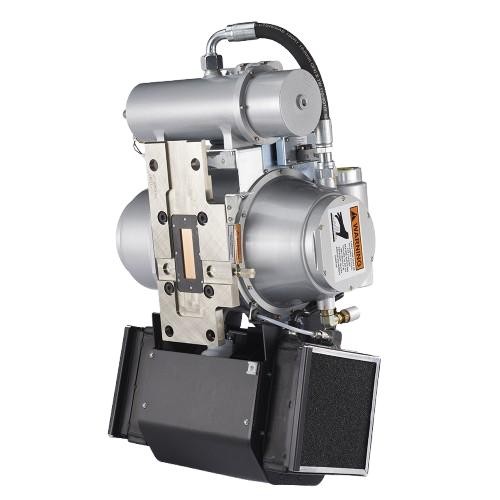
Practical considerations, risk points, and what to ask before you buy, service, move, or maintain imaging equipment.
To request a useful medical imaging equipment parts quote, send the modality, manufacturer, model, system serial number, part number if available, PHI-free photos of the part and label, error codes or symptoms, service history, site location, urgency, and whether a qualified service provider has already diagnosed the issue. For CT, MRI, PET/CT, and X-ray systems, the same symptom can come from different components, so clean documentation helps prevent wrong-part orders and speeds up quoting.
The short version: do not send only “I need a board for a GE CT.” Send enough information for the parts team to verify the part against the machine.
Why parts quotes require more than a part name
Medical imaging equipment is configuration-sensitive. Two scanners can share a manufacturer, model family, and room label but still use different boards, tubes, coils, detectors, cables, workstations, software levels, or revision-specific assemblies. A part that looks right in a photo can still be wrong for the exact system in the room.
That is why a serious parts quote starts with identification, not guessing. A supplier should ask what system the part came from, what failed, how it was diagnosed, and how urgent the request is. If the system is down, a wrong-part order adds downtime, repeat labor, freight costs, and scheduling problems.
For more background, read how to identify the right medical imaging equipment part and why parts availability matters when buying refurbished imaging equipment.
The core parts quote checklist
The best request is one complete package. Scattered text messages, one blurry label photo, and a guessed part number slow the process down.
Before requesting a quote, collect:
- Modality: CT, MRI, PET/CT, X-ray, C-arm, ultrasound, DEXA, cath lab, or another system type
- Manufacturer and exact model: not just “GE CT” or “Siemens MRI”
- System serial number: the OEM serial number, not only the facility asset tag
- Part number if visible: include revision, assembly number, option number, or label details
- Photos: full component, close-up label, connectors, surrounding assembly, and nameplate when safe
- Error codes or symptoms: exact fault text, intermittent behavior, failed test, or service message
- Service history: recent repairs, parts already replaced, PM findings, power events, moves, or upgrades
- Current status: down hard, intermittent, degraded performance, planned replacement, or spare inventory
- Location and urgency: city/state or country, required timing, and ship-to constraints
- Diagnosis status: whether a qualified engineer has confirmed the failed component
If you do not know the part number, say so. A complete request without a part number is usually better than a confident guess copied from an old quote or a different system.
MIS can route these requests through the medical imaging parts team. If the failure is not clearly diagnosed, it may be smarter to start with service support before ordering hardware.
Photos and screenshots that help without exposing PHI
Good photos shorten the quote cycle. Send a sharp close-up label photo plus a wider shot showing where the component sits in the system. For boards, include the label, revision, connector area, and visible damage. For cables, include both ends and any printed cable labels. For tubes, detectors, coils, tables, panels, generators, power supplies, and workstations, include the component label and the system nameplate if accessible.
Screenshots can also help when an error code points toward a subsystem. Before sending them, remove patient names, dates of birth, accession numbers, study details, and other protected health information. The parts team needs the equipment error, not patient data.
When symptoms are not enough to identify a part
Symptoms matter, but they do not always name the failed part. A CT tube error may involve the tube, generator, cooling, cabling, calibration, power, or a related board. A detector fault may involve the detector, data path, cable, acquisition computer, or environmental issue. A table fault can be mechanical, electrical, sensor-related, or tied to an interlock.
MRI has the same trap. A coil problem could be the coil, cable, connector, port, interface board, or scan-room handling issue. A chiller alarm may be a chiller issue, a facility water issue, an environmental issue, or a symptom of a larger cooling problem. Anything tied to MRI safety, magnet environment, cryogen support, RF, gradients, or power should be handled by qualified MRI service professionals.
PET/CT adds another layer because the issue may be on the CT side, PET side, workstation side, or room workflow side. X-ray and C-arm systems can involve mixed packages: detector, generator, tube, table, wall stand, acquisition workstation, and DICOM connection may not all be from one clean configuration.
That is why MIS asks for both the part details and the failure context. The goal is not paperwork. The goal is to avoid shipping the wrong answer.
Parts quote vs. service diagnosis
Sometimes MIS can quote from documentation. If a qualified engineer has identified the failed component, the part label is readable, the system serial number is available, and the request is straightforward, a quote can usually move quickly.
Other requests should become service triage first. If the system has recurring faults, multiple parts have already been changed, the error code points to several possible causes, or the failure affects safety-critical operation, ordering parts blind is risky. A part in a box does not restore a scanner if installation requires calibration, software setup, alignment, safety checks, applications verification, or environmental correction.
For maintenance-related failures, what is included in a CT preventive maintenance visit is a useful companion because PM findings often become planned parts requests instead of emergency orders.
How urgency changes the request
A down system needs different handling than a planned spare purchase.
If the system is down, say that clearly. Include whether the machine is unavailable or intermittent and whether an engineer is already on site. Urgency helps the parts team prioritize verification, sourcing, freight options, and whether service support should be involved.
If the request comes from preventive maintenance, give the PM finding and target replacement window. If you are building spare inventory, say so. The correct answer may depend on failure history, platform age, budget, and whether the part is common enough to justify keeping on a shelf.
Examples by modality
For CT, useful quote details often include scanner model, serial number, tube type if known, gantry fault, table issue, detector message, generator error, recent tube change, chiller event, power event, or calibration history. CT parts requests commonly involve tubes, detector-related components, boards, power supplies, cables, gantry electronics, tables, and cooling-related items.
For MRI, include the model, serial number, coil or accessory label, table/accessory details, workstation information, chiller or environmental notes, and any recent service event. Keep MRI requests high-level unless a qualified MRI engineer is involved; the safety environment is not casual.
For X-ray, C-arm, DEXA, and PET/CT, include the relevant generator, tube, detector, table, workstation, panel, and room configuration details. For PET/CT, specify whether the issue appears CT-side, PET-side, workstation-side, or workflow-related.
FAQ
Can MIS identify a medical imaging equipment part from a photo?
Often, but not always from a photo alone. A photo helps identify labels, connectors, damage, and component type, but the part still needs to be matched against the system model, serial number, revision, configuration, and failure context.
Do I need the system serial number to request a parts quote?
You should provide it whenever possible. The serial number helps verify compatibility and reduces the risk of quoting a part that fits a similar system but not your exact installation.
What if I do not know the part number?
Send clear PHI-free photos, system details, symptoms, error codes, and service history. Do not guess. A complete request with no part number is better than an incorrect part number.
Can I order a part before a technician diagnoses the system?
Sometimes, but it depends on the failure. If the cause is not confirmed, MIS may recommend service diagnosis first so the facility does not spend time and money on the wrong component.
Can I send screenshots of error messages?
Yes, if patient information is removed first. Error text, service messages, and fault codes can be useful, but patient names, accession numbers, dates of birth, and study details should not be included.
Request a faster parts quote
Need a CT, MRI, PET/CT, X-ray, C-arm, ultrasound, DEXA, or cath lab part? Send MIS the modality, make/model, serial number, part number if available, PHI-free photos of the part and label, symptoms or error codes, service history, location, and urgency. Start with the MIS parts page, request a broader equipment quote through /quote, or contact MIS if the failure needs service triage first.
Schema recommendation
Use Article or BlogPosting schema for this educational post and FAQPage schema for the FAQ section. BreadcrumbList is also appropriate. Use Service or Product schema only on approved parts or service landing pages, not here unless exact service or product details are confirmed. Do not add fake price, stock, warranty, rating, shipping, or availability markup.
Need help with this exact problem?
Send the modality, site location, timeline, and any system details. MIS will route the request by intent.
Related resources
Ops Playbook
What Site Requirements Are Needed for a CT Scanner?
CT scanner site requirements include room fit, power, cooling, shielding review, access, IT, service clearance, and project planning.
Ops Playbook
How Long Does CT Scanner Installation Take? Planning Guide
CT scanner installation timing depends on site readiness, rigging, power, cooling, shielding review, IT, service support, and project scope.
Ops Playbook
How Quickly Can a CT Scanner Be Repaired After Downtime?
CT repair speed depends on diagnosis, parts, access, service history, and site readiness. Learn what helps a scanner get back online faster.