
Ops Playbook
How Much Does MRI Service Cost? Key Pricing Factors
June 18, 2026 · 6 min · Medical Imaging Specialists
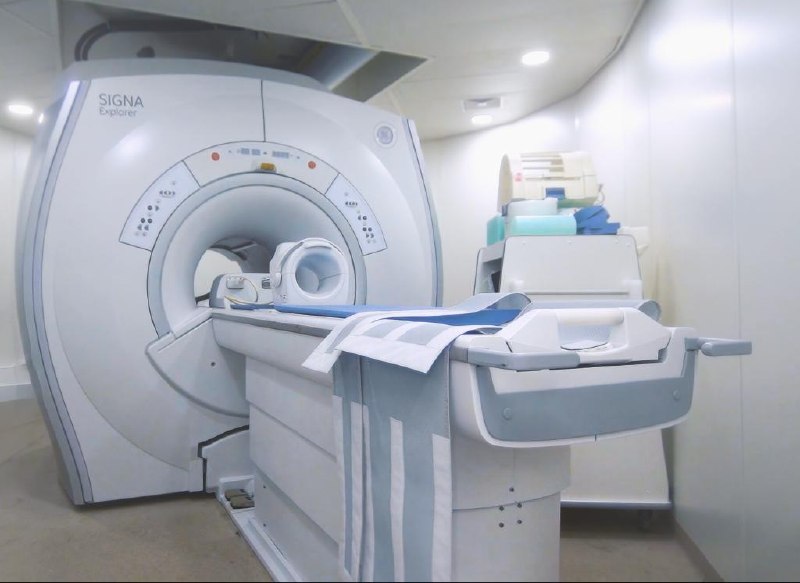
Practical considerations, risk points, and what to ask before you buy, service, move, or maintain imaging equipment.
Considering a lease instead?
Equipment, service, PMs, parts, and applications support can be bundled into one monthly payment.
If this article is about financing, ROI, service contracts, or total cost of ownership, the leasing model may simplify the decision.
MRI service cost depends on the system model, service issue, labor time, travel, parts availability, cryogen or chiller risk, software/options, preventive maintenance history, and whether the facility is using time-and-materials, PM-only coverage, or a fuller service agreement. A minor scheduled inspection is a different cost conversation than an urgent magnet, gradient, RF, table, coil, chiller, or workstation failure on a scanner with patients booked all week.
The useful answer is knowing what drives the quote before downtime forces the decision.
Why MRI service pricing varies so much
MRI systems are expensive to service because the machine is not one simple box. A clinical MRI suite includes the magnet, gradients, RF chain, coils, table, cryogen support, chiller or cooling infrastructure, electrical service, computer systems, software, applications, room environment, RF shielding, PACS/RIS connectivity, and safety controls around the magnet room.
That means two facilities can both ask, “How much does MRI service cost?” and be describing completely different problems. One may need a routine preventive maintenance visit on a stable 1.5T scanner. Another may have a down magnet, recurring chiller alarms, intermittent coil artifacts, or a table problem that only appears during a certain exam workflow.
The quote should start with scope. Is this planned maintenance, emergency repair, a second opinion, a parts request, an image-quality complaint, or a site-environment problem? For related maintenance context, see what is included in MRI preventive maintenance and the broader CT and MRI preventive maintenance checklist.
The biggest MRI service cost drivers
The first cost driver is the system itself. Manufacturer, model, field strength, software level, coil package, age, and configuration all affect service planning. A legacy open MRI, a conventional 1.5T, a wide-bore 1.5T, and a 3T scanner do not carry the same parts profile or service complexity.
The second driver is urgency. Scheduled work can often be planned around engineer availability, parts sourcing, and patient volume. Emergency service for a down scanner may require faster dispatch, after-hours coordination, expedited freight, and a narrower troubleshooting window.
Parts are the third driver. Some MRI issues can be resolved with adjustment, cleaning, configuration review, or a known service action. Others require coils, boards, cables, power supplies, table components, chiller parts, workstation hardware, or manufacturer-specific assemblies. Parts availability matters, especially on older platforms. MIS supports imaging facilities through both field service and medical imaging parts, because service and parts planning need to work together.
The fourth driver is the condition history. A scanner with clean PM records, stable environment, known service history, and clear error logs is easier to evaluate than a system with recurring symptoms, unknown prior repairs, missing records, or several parts already swapped without a clear diagnosis.
Time-and-materials vs service agreement
Facilities usually pay for MRI service in one of three ways: time-and-materials, preventive-maintenance-only coverage, or a broader service agreement. The right structure depends on risk tolerance, exam volume, scanner age, parts exposure, and whether the facility can handle unpredictable downtime costs.
Time-and-materials can work when the scanner is stable, the facility has low volume, or the site only needs occasional help. The tradeoff is variability. If the system has a major failure, the facility owns the labor, travel, parts, and downtime risk.
PM-only coverage is more structured. It gives the scanner scheduled attention and better documentation, but it does not automatically mean every repair, part, tube, coil, chiller issue, or emergency event is covered. The details matter.
A fuller service agreement may cost more month to month, but it can make budgeting cleaner for high-volume facilities that cannot afford surprise downtime. The important question is not “Which plan is cheapest?” It is “Who owns the risk when the scanner goes down?” For more on that decision, read medical imaging service contracts explained.
What information to send before requesting MRI service
A good MRI service quote starts with clean information. “Our MRI is down” is enough to start a conversation, but it is not enough to scope the work.
Before contacting a service provider, gather:
- Manufacturer, model, field strength, and serial number
- Current status: down, intermittent, degraded image quality, safety concern, or planned PM
- Exact error messages, fault codes, and when they appeared
- PHI-free screenshots or photos of system messages, labels, and visible issues
- Recent service history, PM records, prior parts replaced, and recurring symptoms
- Chiller, HVAC, room temperature, humidity, or facility-power events if relevant
- Coil, table, workstation, network, or PACS/RIS symptoms if the issue is workflow-specific
- Site location, urgency, patient schedule impact, and access constraints
Do not send patient names, accession numbers, reports, study details, or screenshots that expose protected health information. The service team needs machine context, not patient data.
Common mistakes that make MRI service more expensive
The first mistake is waiting until the scanner is fully down. MRI problems often announce themselves early: intermittent artifacts, recurring chiller alarms, table motion issues, coil errors, failed QA trends, computer instability, or repeating faults after restart. Those symptoms should be documented and reviewed before they become a room-closing event.
The second mistake is treating parts as the diagnosis. A coil fault may involve the coil, cable, connector, interface board, scan-room handling, or software condition. A cooling alarm may involve the chiller, room environment, facility water, filters, sensors, or a larger heat-load issue. Swapping the easiest part first can turn one problem into multiple invoices.
The third mistake is ignoring site conditions. MRI is sensitive to room environment, power quality, cooling, RF shielding, and handling practices.
The fourth mistake is comparing service quotes without comparing scope. One quote may include travel, labor minimums, documentation, PM work, and a defined escalation path. Another may only cover the first visit. If the quote does not say what is included, what is excluded, and how parts are handled, the price is not telling the story.
When repair should trigger a replacement conversation
Not every MRI service problem means the system should be replaced. Many scanners can run productively for years with good PM, qualified service, and a realistic parts plan.
But repeated failures should start a wider conversation. If the system is aging, parts are getting harder to source, downtime is rising, software limitations are affecting clinical workflow, or repair costs are becoming hard to justify, the facility should compare repair, upgrade, replacement, mobile coverage, and resale value before making another emergency decision.
That is where MIS can connect the service conversation to equipment planning. The same issue may lead to a repair, a parts quote, a PM plan, a refurbished MRI replacement, or temporary mobile coverage through mobile imaging leasing. If replacement is on the table, review the refurbished MRI scanner buying guide and MRI equipment.
FAQ
How much does an MRI service call cost?
It depends on location, urgency, labor time, travel, system model, and whether parts are needed. The fastest way to get a realistic quote is to send the system details, symptoms, error history, service history, and urgency.
Is MRI preventive maintenance cheaper than emergency repair?
Preventive maintenance is usually easier to budget because it is planned. It does not eliminate all downtime, but it can catch conditions that become expensive failures later. Emergency repair carries more uncertainty because the issue may require urgent labor, parts, travel, and patient-schedule recovery.
Can an independent service provider service MRI systems?
Often, yes, depending on the system, region, service access, parts path, and scope of work. The provider should have qualified MRI service experience, documentation discipline, safety awareness, and a clear parts and escalation process.
What MRI problems usually require parts?
Parts may be involved in coil issues, table faults, board failures, power problems, chiller issues, workstation failures, cable problems, or other subsystem failures. The right part should be verified against the exact scanner and diagnosis before ordering.
Should I repair an old MRI or replace it?
It depends on clinical need, uptime history, parts availability, software limitations, service cost trend, site plans, and replacement economics. A single repair may be sensible. Repeated major failures should trigger a repair-versus-replacement review.
Schema recommendation
Use Article or BlogPosting schema for the post and FAQPage schema for the FAQ section. If this content is repurposed onto an approved MRI service landing page, consider Service schema there.
Talk to MIS before the next failure sets the budget
If your MRI service costs are becoming unpredictable, send MIS the make, model, serial number, symptoms, error history, service records, location, and urgency through the service page, contact page, or quote request. The right answer may be repair, PM, parts planning, replacement, or mobile coverage, but it should start with the scanner in the room.
Need help with this exact problem?
Send the modality, site location, timeline, and any system details. MIS will route the request by intent.
Related resources
Ops Playbook
Should Older Imaging Equipment Be Serviced More Often?
Older CT, MRI, PET/CT, and X-ray systems may need closer service planning as scan volume, parts risk, environment, and downtime history change.
Vendor Vetting
Can an Independent Service Provider Service Imaging Equipment?
Can an independent service provider service CT, MRI, PET/CT, or X-ray equipment? Yes, if the scope, training, parts, and documentation fit.
Vendor Vetting
Do Refurbished CT Scanners Need OEM Service Plans?
Do refurbished CT scanners need OEM service? Not always. What matters is qualified support, parts access, documentation, and uptime risk.