
Buyer's Desk
Used CT Scanner Hidden Costs: What to Budget Before You Buy
June 15, 2026 · 6 min · Medical Imaging Specialists
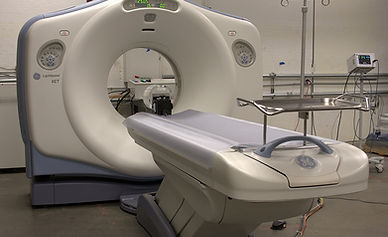
Practical considerations, risk points, and what to ask before you buy, service, move, or maintain imaging equipment.
Considering a lease instead?
Equipment, service, PMs, parts, and applications support can be bundled into one monthly payment.
If this article is about financing, ROI, service contracts, or total cost of ownership, the leasing model may simplify the decision.
The hidden costs of buying a used CT scanner usually come from everything around the scanner: site preparation, deinstallation, crating, freight, rigging, installation, calibration, software, accessories, service coverage, parts availability, tube risk, IT integration, applications support, and downtime. The equipment price matters, but it is only one line in the project budget. A serious quote should explain what is included, what is excluded, and what depends on your room, scanner model, timeline, and service plan.
If you are comparing used CT quotes, normalize the scope before you compare the numbers.
The scanner price is not the project price
A used CT scanner can look affordable on paper and still become expensive if the project scope is incomplete. The lowest equipment number may exclude removal, freight, room prep, installation, testing, and support after go-live.
This is where buyers get burned. One quote includes deinstallation, freight, rigging, installation, applications, and service. Another quote is gantry, table, and console only. Those are different projects.
Before you accept a used CT scanner quote, ask for a line-by-line scope. Confirm the model, slice count, tube status, software/options, workstation, accessories, current location, removal plan, shipping terms, installation responsibility, and service coverage.
For a broader equipment checklist, read What to Look for When Buying a Used CT Scanner. If you are still choosing the system class, review CT scanner slice count planning before you price the project.
Site preparation can change the whole budget
CT site prep is one of the most common hidden-cost categories because every room is different. A scanner that worked perfectly in one facility still has to fit your room, your power, your HVAC, your shielding plan, your workflow, and your delivery path.
Typical site-related budget items include room dimensions, service clearances, floor condition, electrical service, grounding, HVAC capacity, heat load, shielding review, control-room layout, network drops, workstation location, door openings, hallway access, and the route from the truck to the exam room.
Do not treat site planning as paperwork. The right question is not “will a CT fit?” It is “will this exact CT fit this exact room with the required access, power, cooling, shielding review, and workflow?”
MIS covers the common planning issues in the CT scanner site preparation guide. Final requirements should always be reviewed against the selected scanner, local conditions, and qualified site-planning professionals.
Deinstallation, freight, and rigging are real costs
Used CT scanners have to come out of somewhere before they can go into your facility. That removal can be simple, or it can involve tight hallways, dock limits, elevator constraints, special handling, crating, insurance, storage, and coordinated scheduling.
Ask who is responsible for deinstallation. Ask whether the scanner will be powered down, documented, labeled, crated, insured, and transported by people who understand medical imaging equipment. Mishandling can create damage that appears during installation or calibration.
Then look at your own delivery path. A clean room does not help if the gantry cannot get through the building. Rigging should be discussed early, especially for older buildings, second-floor suites, tight campuses, and international shipments.
For buyers replacing an existing system, the outgoing CT also has a cost story. Removal, resale, trade-in, parts recovery, or disposal should be scoped before the new scanner arrives. MIS can help through CT equipment planning, service, and parts.
Tube, detector, and major component risk belongs in the budget
The CT tube is often the biggest component risk in a used CT purchase. That does not make an older tube an automatic deal-breaker. It means tube history belongs in the financial decision, not after installation.
Ask for available tube data, service history, recent errors, major component replacements, detector notes, calibration records, and operating status. The useful metrics vary by manufacturer and model, so avoid casual comparisons across platforms.
Detector condition, table condition, high-voltage components, cooling issues, console hardware, workstation age, and recurring faults can also affect ownership cost. A system that is “working when removed” may still need parts, calibration, software attention, or service before patient volume.
If tube planning is part of the decision, read MIS’s CT x-ray tube replacement cost guide. The point is not to guess the failure date. The point is to understand the risk before the scanner becomes your responsibility.
Software, accessories, and IT are easy to underquote
Used CT quotes can get vague around software and accessories. That is dangerous because the scanner’s clinical value is not just the gantry and table.
Confirm which software options are active, what is transferable where applicable, what workstation is included, whether the console is complete, and whether required accessories are part of the quote. Do not assume cardiac tools, dose tools, advanced reconstruction, injector workflow, or specialty packages are included because the platform can support them.
IT can also become a hidden cost. DICOM send, modality worklist, PACS/RIS connectivity, dose reporting, network configuration, user accounts, and cybersecurity review may involve your internal team, PACS vendor, equipment vendor, and service engineers. Get those assumptions out early.
Also protect patient privacy during quoting and troubleshooting. If you send screenshots, photos, logs, schedules, or documents, remove patient names, dates of birth, accession numbers, and any other PHI unless you have a proper approved channel and reason to share it.
Service, parts, and downtime are part of the purchase
The purchase is not over when the scanner arrives. The real test is whether the system can stay running after go-live.
Ask who will service the CT, whether the vendor has in-house engineers or subcontracted coverage, what preventive maintenance looks like, how urgent repairs are handled, and whether common parts are available. Parts availability can matter as much as the purchase price on older CT platforms. A scanner that nobody can support is not a bargain.
Service scope should match business risk. A low-volume backup unit may not need the same coverage model as a high-volume outpatient CT room. But every buyer should understand PM, time-and-materials service, parts sourcing, response expectations, and escalation paths before purchasing.
Useful related reading: Medical Imaging Service Contracts: What Facilities Should Compare, What Is Included in a CT Preventive Maintenance Visit?, and Refurbished Imaging Equipment Parts Availability.
Used CT hidden-cost checklist
Before comparing used CT scanner quotes, ask each vendor to separate the equipment price from the full project cost.
Confirm these categories:
- Scanner make, model, slice count, year/generation, and current location
- Tube status, detector condition, major component history, and service records
- Included console, workstation, software options, accessories, and documentation
- Deinstallation, crating, freight, insurance, storage, and delivery responsibility
- Rigging path, room access, floor loading, and site logistics
- Electrical, HVAC, shielding review, network, and room-prep assumptions
- Installation, calibration, acceptance testing, applications support, and training
- Warranty, PM, service coverage, parts availability, and response expectations
- Downtime plan if installation is delayed or an early fault appears
If a quote cannot answer these questions, it is not complete enough to compare.
FAQ
What hidden costs should I budget for when buying a used CT scanner?
Budget beyond the scanner for site preparation, deinstallation, crating, freight, rigging, installation, calibration, software, accessories, IT integration, applications support, service coverage, parts, tube risk, and downtime. The exact mix depends on the scanner, room, facility, geography, and service plan.
Is site preparation included in a used CT scanner quote?
Sometimes, but do not assume it. Many equipment quotes exclude room construction, electrical work, HVAC changes, shielding review, network drops, and facility-side contractors. Ask the vendor to define exactly what is included and what your facility must handle.
Why does CT tube condition matter when buying used?
The CT tube is a major wear component. Its history can affect both purchase risk and early ownership cost. Ask for available tube usage data, install history, and service context, then have someone familiar with that model interpret it.
Should I buy the cheapest used CT scanner I can find?
Only if the full project still makes sense after site work, service, parts, tube risk, software, installation, and uptime are considered. A cheap scanner with poor support can cost more than a better-scoped system.
Can MIS help compare used CT scanner quotes?
Yes. MIS can help evaluate CT equipment, parts availability, service planning, installation scope, and quote assumptions. Start with CT equipment, request a scoped equipment quote, or contact MIS through services if service risk is the main concern.
Schema recommendation
Use Article or BlogPosting schema for the main post and FAQPage schema for the FAQ section. Service schema is appropriate where this post supports MIS equipment sourcing, installation planning, parts, and service pages. Product schema should be reserved for specific CT inventory pages, not this general buyer guide.
Ready to price a used CT scanner without guessing? Send MIS the intended exam mix, target slice count, budget range, room/site status, timeline, service expectations, and any PHI-free equipment documents through the quote request page. If you are comparing support risk, start with services or parts before committing to the equipment.
Need help with this exact problem?
Send the modality, site location, timeline, and any system details. MIS will route the request by intent.
Related resources
Ops Playbook
What Site Requirements Are Needed for a CT Scanner?
CT scanner site requirements include room fit, power, cooling, shielding review, access, IT, service clearance, and project planning.
Ops Playbook
How Long Does CT Scanner Installation Take? Planning Guide
CT scanner installation timing depends on site readiness, rigging, power, cooling, shielding review, IT, service support, and project scope.
Buyer's Desk
What Is a Fair Price for Used X-Ray Equipment?
A fair used X-ray equipment price depends on scope, detector condition, site readiness, installation, service, parts, and support.